
AI & HPC Lifecycle
Every GPU needs a value plan.
CompuStak brings AI and HPC datacenter owners (hyperscalers, neoclouds, supercomputing centres and AI factories) together with decommissioning specialists and verified buyers, to keep every GPU and server in use for longer: circularity, secure retirement and resale.
A new kind of end-of-life problem
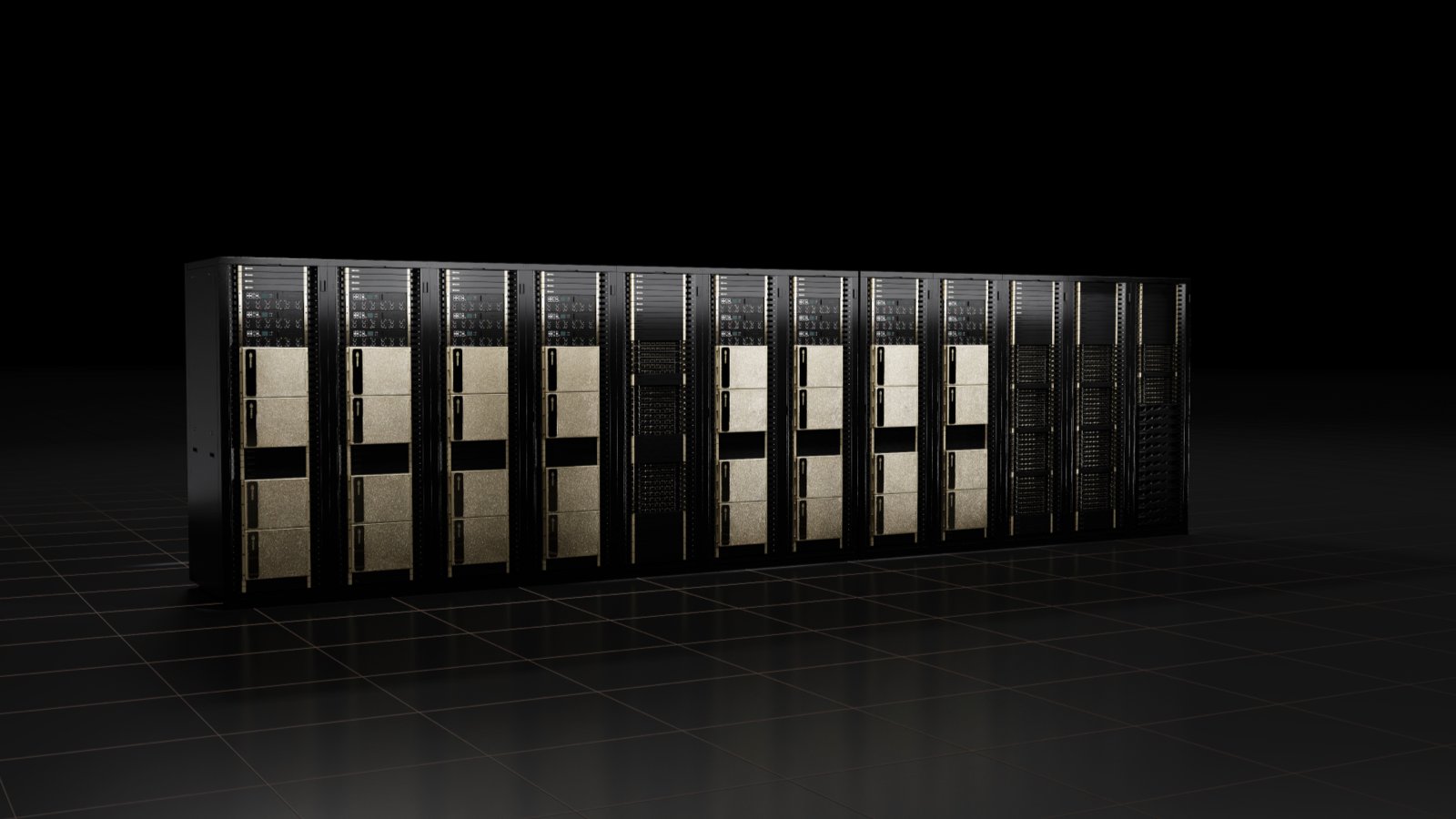
AI hardware is dense, liquid-cooled, export-controlled and valuable. Handling it like ordinary IT equipment wastes value and creates risk.
Circularity is now expected
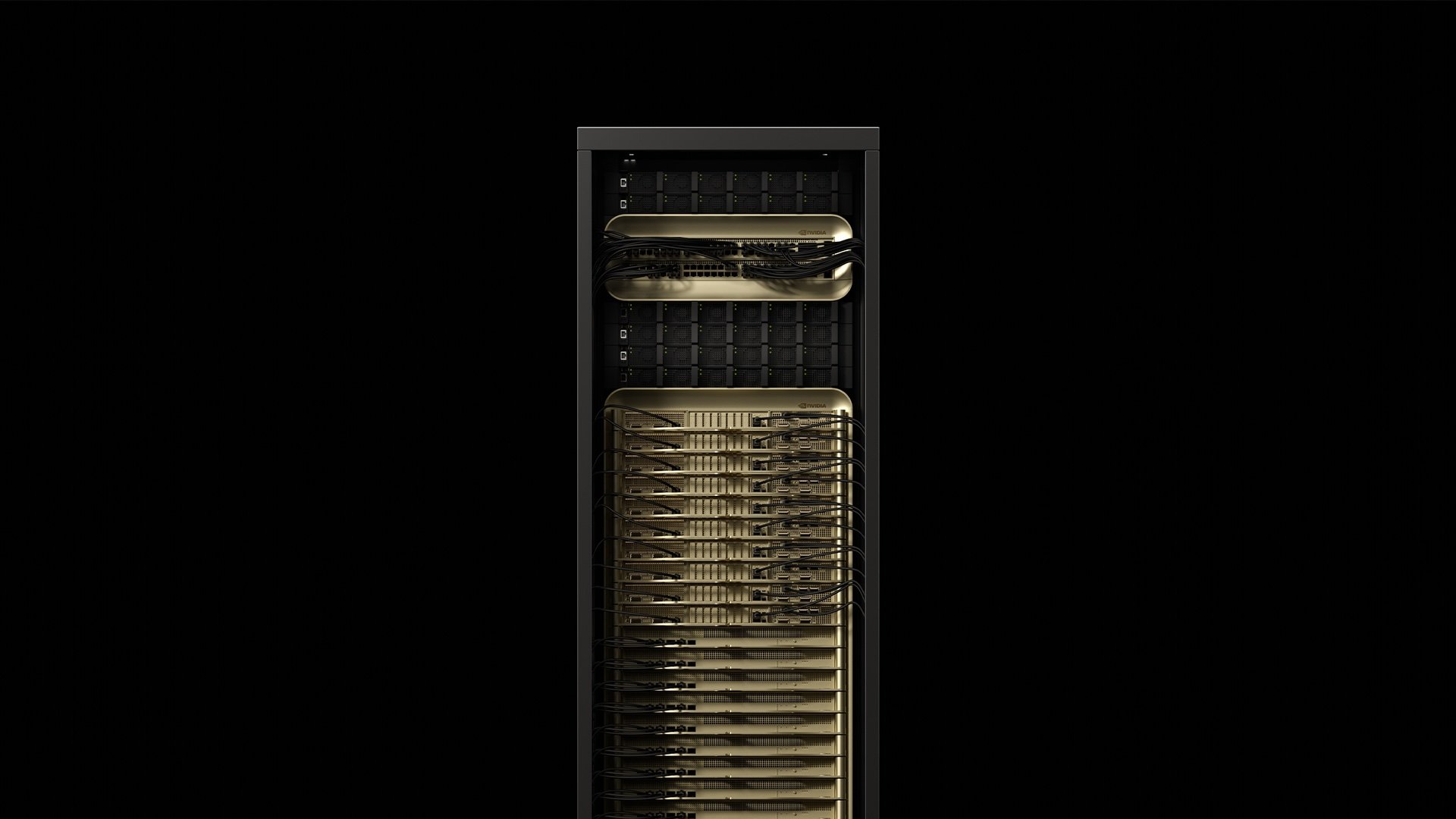
Public funding programmes and waste-electronics rules, such as the EU’s WEEE Directive, ask operators to show how equipment is reused, recovered and recycled.
Residual value is real
Retired GPUs can still earn money in other markets. A planned route to resale supports the numbers lenders and investors look at.
The hardware is different
Liquid-cooled racks, secure data erasure and export-control rules need specialist handling and a clear chain of custody.
From a straight line to a loop
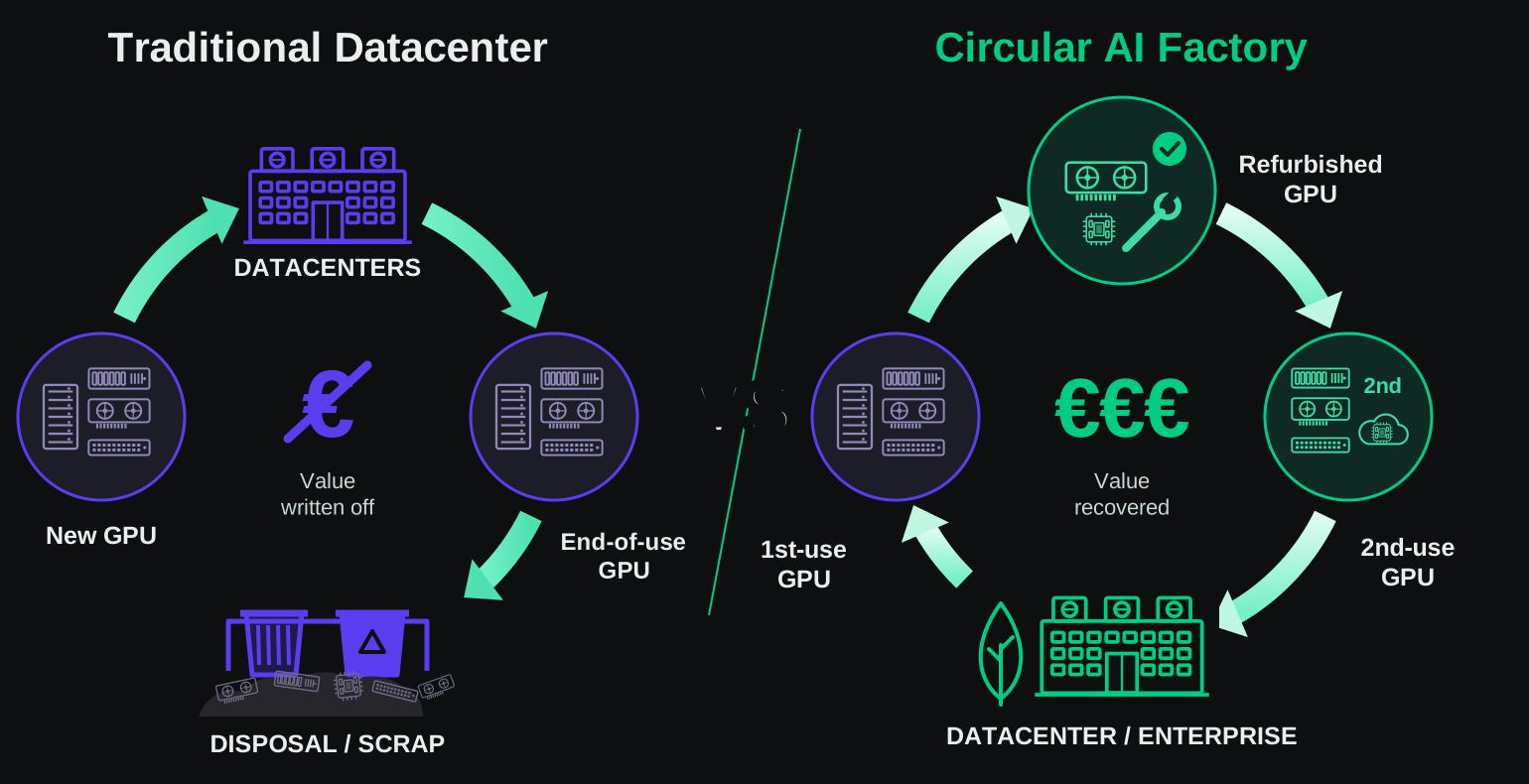
In a traditional datacenter, GPUs go from first use straight to disposal and scrap, and whatever value they had left is written off. A circular AI factory refurbishes 1st-use GPUs and redeploys them for a 2nd life in another datacenter or enterprise, so the value comes back to the owner. AI hardware has more value to keep in the loop than almost any other equipment.
A specialist at every step
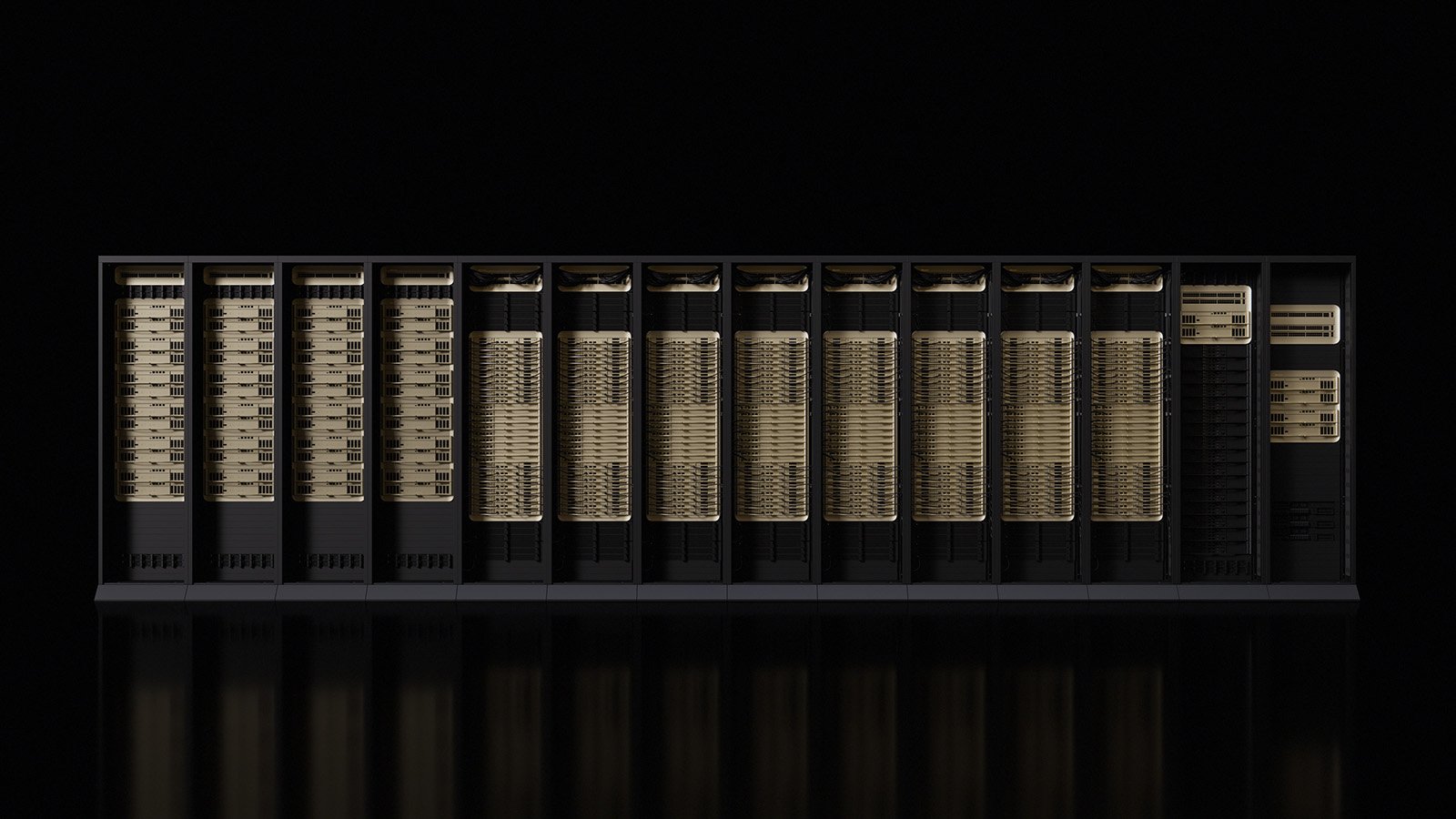
CompuStak runs the plan; certified specialists deliver each step and contract directly with the owner, and the owner chooses the route to sale. It covers every retiring asset, not just GPUs: servers, storage, networking, power and cooling.
Decommission
On-site removal, certified data erasure and chain of custody.
Prepare
Safe handling of liquid-cooled systems and re-validation at tray level.
Certify and record
Serial-level tracking, condition grading and circularity reporting.
Remarket
Resale through specialist partners or a marketplace of verified buyers in each region. The owner keeps title.
For owners and operators
An end-of-life plan you can put in a funding proposal or a tender response, and partners who deliver it.
For lenders and investors
Independent evidence on how retired hardware is recovered and reported, to support residual-value assumptions.
Two routes, one plan
Every retired asset either protects you or pays you back, and usually both. Read how each part of the lifecycle works.
The GPU lifecycle
Plan the second life on day one: procurement terms, redeployment, retirement, resale and recovery.
Read about the lifecycleITAD for AI infrastructure
Decommissioning liquid-cooled racks, data sanitisation per serial number and a chain of custody auditors accept.
Read about ITADRemarketing AI assets
Routes to resale and reuse for GPUs, servers and networking, with buyer screening and export checks built in.
Read about remarketingA marketplace for verified buyers
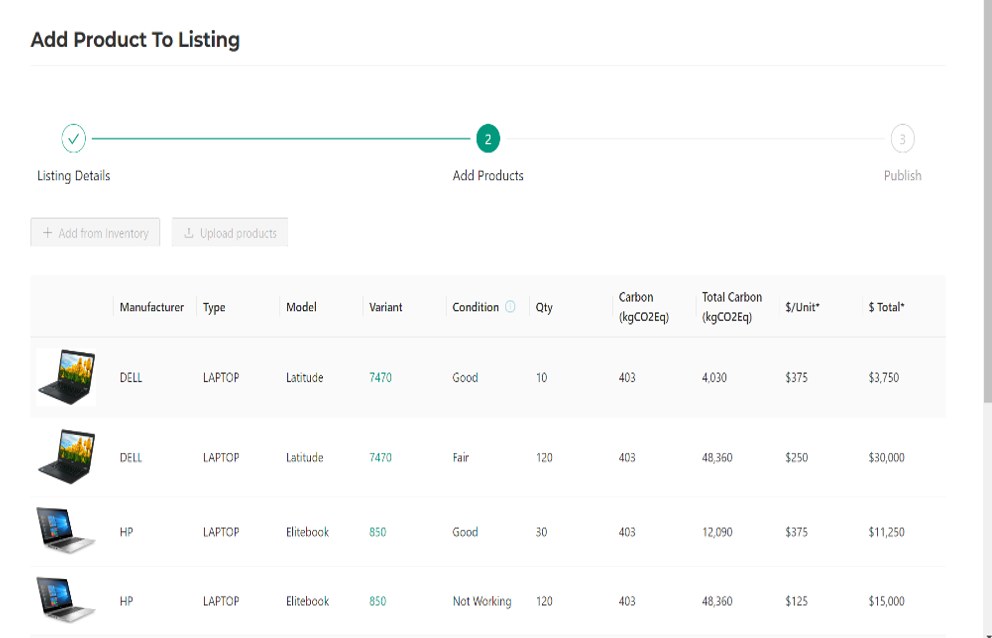
Alongside the specialist partners, owners can list retired hardware by model, condition and quantity. Verified buyers bid, the owner chooses, and the sale contract is directly between owner and buyer. CompuStak runs the programme and the sale on the owner’s behalf. It never takes title or holds stock, so its interest is the same as the owner’s: the best price for every unit.
Evidence you can show a lender or a regulator
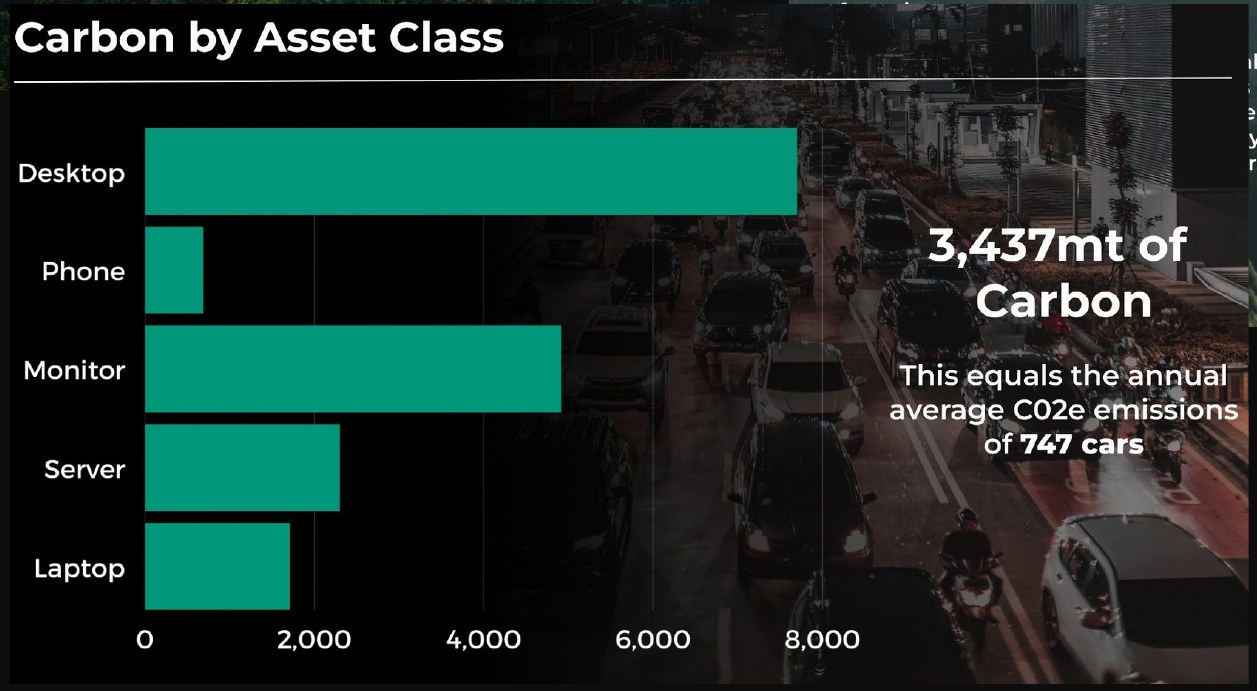
Every asset recorded, graded and reported. Our team has built IT carbon and asset reporting before, and the same discipline applies to GPUs: serial-level records from commissioning to final disposition.
Planning an AI deployment or a financing?
Tell us what you are building and when. We will come back with how the end-of-life plan could work.